Singular Interview
Javier Torices
Artist turning the sea into an experience of calm, introspection, and light
INTERVIEW · OCTOBER 27, 2026
01 / INTERVIEW
What are you currently exploring in your artistic practice that excites you the most?
I remain fascinated by the realistic and atmospheric representation of the sea surface, the water’s transparency, and coastal rock formations (such as the reliefs of Ibiza at Punta Galera or the giant waves of Nazaré). My most recent work seeks to capture that constant interplay between matter, light, and salt, where the density of the water and its reflections go beyond mere description to evoke an emotional, contemplative experience of serenity and calm.
02 / INTERVIEW
Is there an artwork on your Singulart profile that best represents your current practice? Tell us why you chose it.
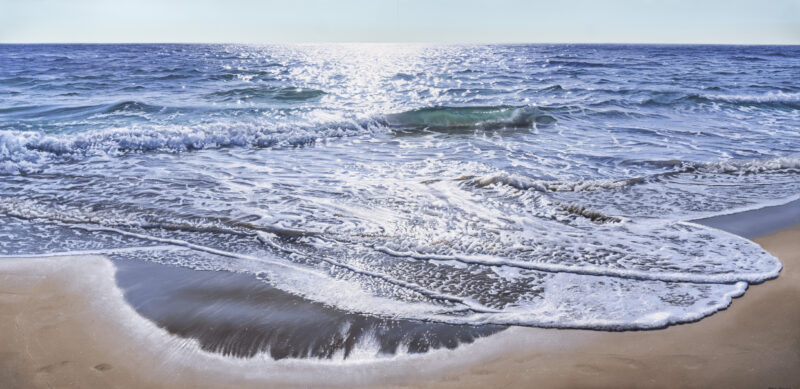
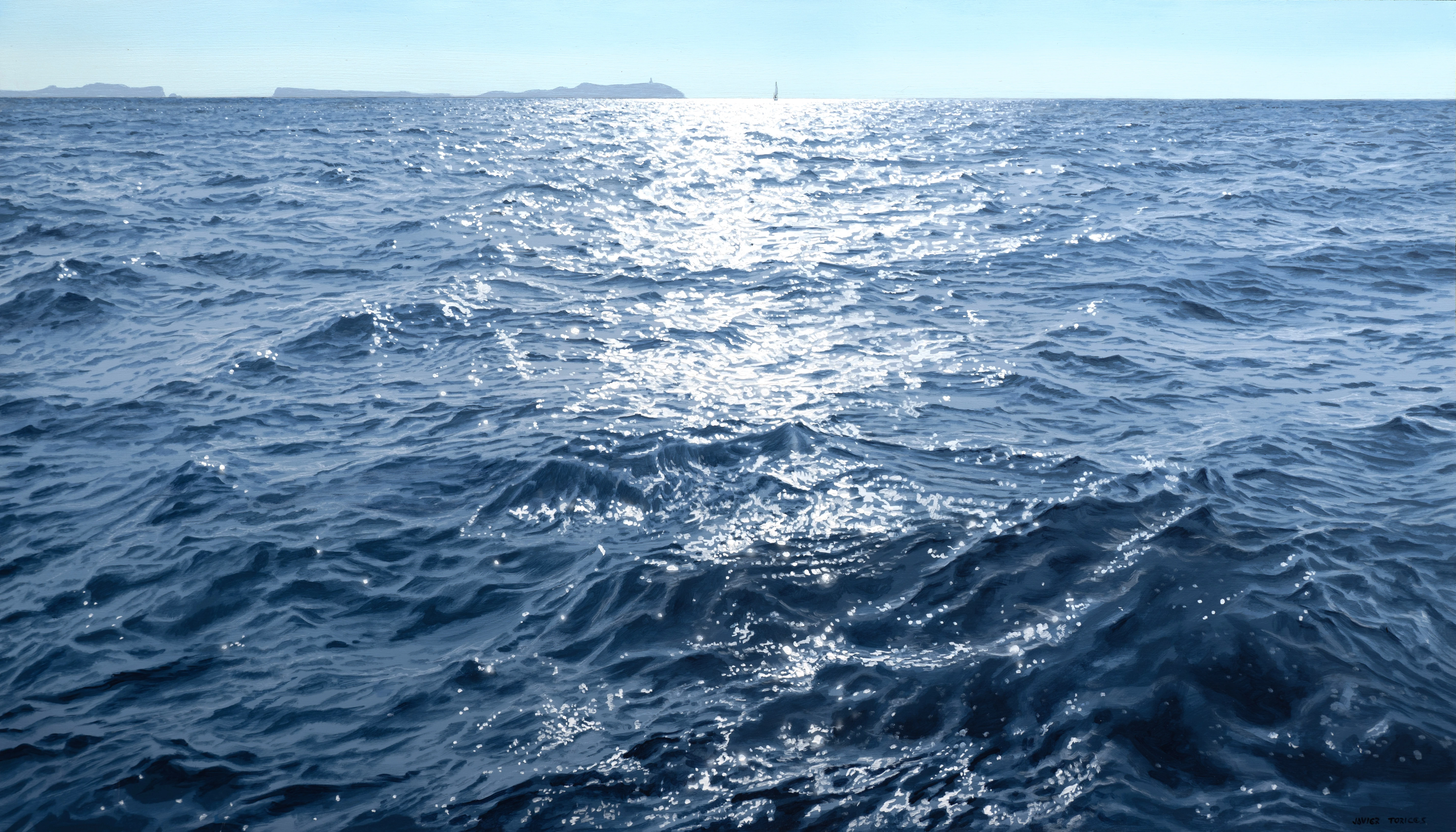
The artwork Navegando en Ibiza 17:16. Unlike compositions featuring rock formations, here the absolute protagonist is the moving body of water and the fine line of the horizon in the distance. It is a work that invites an immersive, meditative experience, conveying a sense of serenity, an open horizon, and pure freedom.
03 / INTERVIEW
What experiences, places, or moments have had the greatest influence on the artist you are today?
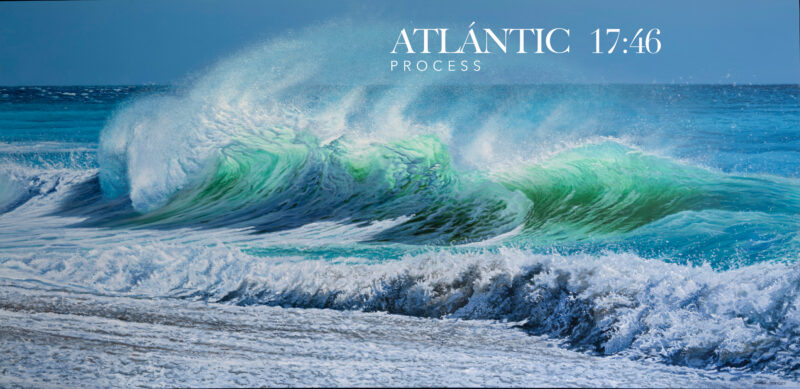
Direct contact with the Atlantic and observing the power of the ocean in places like Nazaré (Praia do Norte) introduced a different scale to my work. Contemplating the force of giant waves and the ocean mist led me to investigate the density of moving water, bringing a more dynamic and awe-inspiring dimension that complements the meditative serenity of the Mediterranean.
04 / INTERVIEW
Is there a story about your artistic journey that people don’t usually know, but which has helped shape the artist you are today?
Contrary to the image of the painter who only faces the blank canvas, my studio routine begins much earlier: in the manual cutting, sealing, sanding, and priming of each panel, and it concludes with the custom crafting of support structures and floating frames. This studio experience—where the physical labor of woodworking and preparation coexists with the sensitivity of brushwork and glazes—shaped the artist I am today. Mastering the craft and caring for the support from scratch is what gives me the freedom to paint the sea with the precision and serenity I wish to convey.
05 / INTERVIEW
Are you currently working on any project you would like to share?
On a proposal that is just emerging right now, which we are shaping alongside nine other visual artists. It is an initiative in its incubation phase aimed at interpreting the poetic and literary work of Antonio Gala through audiovisual and cinematic language. In my case, I am defining how the painted imagery of the sea and the texture of paint will dialogue on screen with the rhythm and poetry of his verses.
06 / INTERVIEW
You began painting professionally at the age of 14 and mention that it came naturally to you; how has your connection to painting evolved from those early days to now?
In my early years, the technical challenge lay in the descriptive accuracy of what I observed. Today, my connection with painting goes far beyond representation. I am interested in the poetics of the marine space: capturing the density of the salt, the suspended atmosphere, and the vibration of light at specific moments. Realism has become a tool in service of contemplation, aiming to evoke a sense of calm, silence, and transcendence in anyone who views the work.
07 / INTERVIEW
The sea is a recurring motif in your work, through which you aim to convey the sense of calm and introspection it generates. Do you recall a specific moment by the ocean that you feel was fundamental to your creative inspiration?
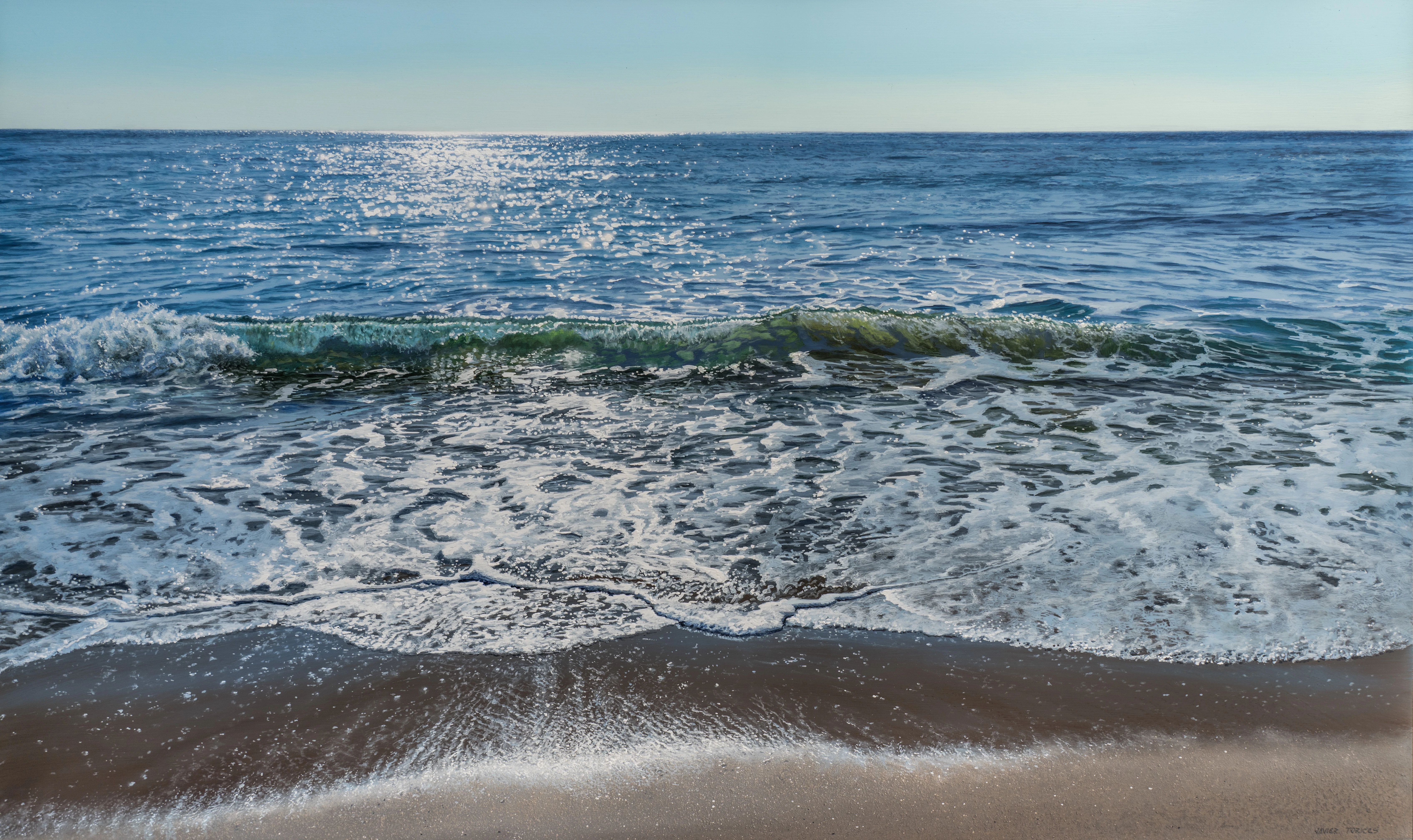
There is a specific moment I hold with absolute clarity, which I consider the cornerstone of my creative inspiration. It happened during a stay in Ibiza, at sunset, in the area of Punta Galera. I was standing on one of the horizontal rock platforms alongside my wife, Lorena, watching the early evening light begin to fall obliquely across the body of water and the salt-soaked stone.
In that instant, the rhythmic murmur of the sea, the scent of sea salt, and the way the solar glints transformed the water’s surface into a glowing sheet led me into a state of rapturous awe: an absolute suspension of time, an inner silence where thought falls away to give rise to pure fascination. It was not merely the visual beauty of the landscape, but the profound sense of serenity, contemplation, and refuge that wrapped around me.
That experience revealed something fundamental: what passionately draws me to the sea is not just its physical appearance, but its capacity to act as a mirror for human introspection. Ever since that moment, every time I prepare a wood panel in the studio and apply the first layers of color, my goal is not simply to paint a realistic seascape, but to give form to that rapturous awe—allowing anyone who stops before the painting to experience that same pause, calm, and reconnection with nature that I experienced by the shore.
08 / INTERVIEW
You live and work in Spain, a country with an extensive coastline and varied landscapes; how does your local environment influence the emotions and atmospheres you portray in your paintings?
Living and working in the center of the Iberian Peninsula provides me with a key strategic advantage: it allows me to access all of our coasts—the Mediterranean, the Cantabrian, the Atlantic, and the southern Atlantic in Cádiz—with relative ease, absorbing the unique personality of each sea and bringing it back to the studio.
This diversity directly shapes my painting:
The Studio as a Space of Synthesis: Painting from the central plateau gives me the ideal distance to avoid copying landscape directly from nature; instead, it allows me to distill the emotional memory of each coastline and transform that geographical variety into a universal language of light, salt, and silence.
The Mediterranean: The backlighting, turquoise transparencies, and coastal rocks of places like Ibiza bring to my work an atmosphere of calm and refuge where time stands still.
The Atlantic and the Cantabrian: The power of the north, the ocean mist, and the dynamism of giant waves add a wild scale and the physical density of the ocean in motion.
The Southern Atlantic (Cádiz): A clean, incandescent light and infinite horizons enrich my palette with unique nuances of brightness and vastness.
“What passionately draws me to the sea is not just its physical appearance, but its capacity to act as a mirror for human introspection.”
Javier Torices
09/ INTERVIEW
Your acrylic on panel technique displays a balance between realism and the expressiveness of the brushstroke; what drew you to explore this dialogue between precision and loose gestures in your style?
That balance between detailed precision and the freedom of the brushstroke is the key to my current artistic language, born from an inevitable technical and emotional evolution after more than four decades in the studio. What drew me to explore this coexistence between the precise and the expressive comes down to three essential aspects:
- The Real Dynamism of Water: The sea is neither static nor perfect. Although from a distance the eye perceives the clarity of light or the shape of a wave, up close the water is pure vibration, moving foam, and organized chaos. Capturing that vitality requires the brushstroke to break free—demanding gesture, impasto, and freshness in the paint mark.
- The Contrast of Textures on Wood: Working with acrylic on an Okoumé panel provides me with a smooth, stable surface where two worlds can coexist. I can apply nearly transparent, precise glazes for the clarity of solar reflections, while simultaneously unleashing the stroke with more gestural and tactile brushwork in areas of foam, salt, or rock.
- Avoiding the Coldness of Mere Copying: If I restricted myself to a purely descriptive or photographic accuracy, the artwork would lose its soul. The loose brushstroke and the visible mark of the artist’s hand are what bring emotional warmth, rhythm, and poetry.
Ultimately, I am drawn to that duality: precision invites the viewer to step into the painting and contemplate the realism of the scene, while the loose gesture reminds them that they are standing before a living painting—made of matter, light, and breath.
10 / INTERVIEW
You mention that painting the sea connects us with the spiritual and ancestral; what do you hope viewers feel when contemplating your work, and what is the most important personal message you wish to share through your art?
What I hope someone experiences when standing in front of one of my artworks is, above all, a reunion with silence and a space for introspection. In a world marked by hurry, image saturation, and constant noise, my painting seeks to be a refuge—an open window through which fresh air enters, allowing the viewer to pause, take a deep breath, and feel time suspend for a moment.
What I hope viewers feel goes far beyond mere aesthetic appreciation:
- A Primordial Mirror: The sea acts as a primal mirror. Contemplating it reconnects us with something far greater than ourselves—a geological, ancestral, and profoundly serene scale of time.
- A Suspension of Time: I hope viewers experience the very same pause I live along the coastline; a moment where everyday thoughts quiet down to make way for a comforting inner silence.
- A Physical and Immersive Presence: That they do not simply see a landscape painted on wood, but truly feel the vibration of light, the density of the water, and the salty breath of the horizon—as though standing at the edge of the shore or out in open waters.
The fundamental message I wish to convey is that nature, and the sea in particular, remains our sanctuary of calm and our most direct connection to what is essential. Through matter, light, and salt, I attempt to remind us that no matter how turbulent the outer world may be, there is always an expansive space of peace, vastness, and contemplation to which we can return to find ourselves again. Ultimately, my art seeks to be an open window to that necessary silence.